
A note to our readers: While some examples in this article reference specific countries or systems, the concepts covered apply broadly across the world. We have aimed to keep this as universal as possible so it is useful wherever you are reading from.
This article is for informational purposes only. Views expressed are general in nature and should not be relied upon as professional advice.
You know that feeling when you are sitting with your friends and someone asks something that sounds so simple, but nobody actually knows the answer? Like why does the sky turn different colors? Or how does a vaccine actually protect you? Or wait, does anyone actually understand how inflation works?
Asking those questions is not ignorant. Not even a little. They are the queries of the inquisitive. Millions of people seek for this material every day on Google, Reddit and now AI tools, so you are not alone.
31 General Knowledge Questions That Reveal How Much You Actually Know
Therefore, we selected 31 of questions people ask every day about science, history, health, finance and the globe. And we answered every single one the way a smart friend would. Straight, simple, no fluff. We pulled together 31 of the most common knowledge questions people search every day and answered every one in plain, simple language.
Bookmark this one. You will come back to it.
7 Most Asked General Knowledge Questions About Science
These are the science general knowledge questions that come up again and again. The ones everyone wonders about but rarely gets a straight answer to.
1. Why is the sky blue?
Okay, this one sounds like a kindergarten question but the actual answer is pretty cool.
Sunlight is made up of all the colors of the rainbow, even though it looks white. Small molecules of gas absorb the light when it enters the atmosphere. Because blue light has a shorter wavelength than the other hues, it causes the molecules it encounters to scatter and bounce about.
You can see that blue light coming at you from all directions when you look up. The sky is that. Those clouds are the sky.
Sunset is quite different. Because the sun is lower in the sky, its light has to go through a lot more air to get to you. By the time it reaches you , much of the blue has already been spread away . All that remains is orange and red. That is why sunsets appear the way they do.
2. Why do we dream?
Honest answer? Scientists still do not agree on this one.
Our current understanding is that the majority of dreaming occurs during Rapid Eye Movement (REM) sleep. It is a stage where your brain is almost as active as when you are wide awake. The leading theory is that your brain uses this time to process what happened during the day, sort through emotions and move important memories into long-term storage.
Some experts believe that dreams are your brain is way of practicing for hard times. Others say they are merely a side effect of your brain conducting its nighttime maintenance job and the tale that your mind tells itself around all that activity is just noise.
Most likely, the reality lies somewhere in the middle. So, that one is very much explained if you keep having dreams of being totally unprepared and turning up somewhere.
3. How do vaccines actually work?
Your immune system also learns from experience, just like the rest of your body.
When you get sick, your body figures out how to fight that specific germ and builds a memory of it. Next time that germ shows up, your immune system recognises it fast and shuts it down before you even feel sick.
Your immune system remembers that lesson when you get a vaccine, so you do not have to get sick initially. A vaccine either gives you a weak or inactive form of the germ, a small piece of it or in the case of mRNA vaccines, a set of brief instructions that tell your cells to make a safe part of the germ is surface. The memory is built by your difence system but then the directions break down and go away.
A few weeks later, if you encounter the real thing, your body already knows exactly what to do. For a deeper explanation of how vaccines protect communities, the World Health Organisation has a clear breakdown worth reading.
Health Disclaimer: The information in this section is intended for general educational purposes only. It is not a substitute for professional medical advice, diagnosis or treatment. If you have a medical concern, please speak with a licensed healthcare provider.
4. What causes earthquakes?
The ground under your feet is not one solid piece. The outer shell of the Earth is broken into massive slabs called tectonic plates and they are constantly moving. Super slowly, like a few centimetres a year. But they never stop.
Where two plates meet, things get complicated. It is possible for them to run into each other, smash together or pull apart. Over time, those edges get more and more stressed. An earthquake occurs when something becomes too much and suddenly releases.
The point underground where it starts is called the hypocenter. The point directly above it on the surface, the one the news always reports, is the epicenter.
5. How does the internet actually work?
Way simpler than you might think once someone explains it properly.
The Internet is essentially a worldwide agreement between computers. They all transmit and receive information via protocols. Clicking on a link makes your device submit a request via your internet provider.
That request is sent to the website server through a network of wires and computers, some of which are on the bottom of the ocean. What the server does is transmit that data back to you in little parts called packets. Your gadget reassembles them in the proper sequence and the site loads.
The whole thing usually happens in under a second. And honestly, considering how much of it runs under the ocean, that is pretty wild.
6. Why is the ocean salty?
Most people never think about this until someone asks and then it bugs them for days.
The ocean is saltiness is the result of a billion-year-long process. Rain is very slightly acidic. In the act of falling it takes up tiny quantities of carbon dioxide from the air and forms a weak carbonic acid. When rain falls on land, it slowly dissolves minerals in rocks, including salts and transports them to rivers.
Rivers transport minerals to the ocean. Water evaporates from the ocean and then returns to the atmosphere as fresh water. However, the salt remains there. And after billions of years of this cycle salt has built up to where it is now.
7. What is gravity?
Gravity is a force that pulls objects with mass toward each other. Every object in the universe with mass has gravity, including you. You are technically pulling the Earth toward you right now, just not enough to notice.
The more mass something has, the stronger its gravitational pull. The Earth has a lot of mass, so its pull is strong enough to keep you on the ground, keep the Moon in orbit and pull rain back down after it rises. The Sun has far more mass than Earth, which is why Earth and all the other planets orbit it.
Albert Einstein went even further and said that gravity is not just a force, but also a way that mass bends space and time itself. Light passing close to big things like stars can bend because of this.
6 History General Knowledge Questions People Are Afraid to Ask
History is full of general knowledge questions that seem like they should have obvious answers. But most people quietly wonder about them for years without ever looking them up.
8. Who was the first person to walk on the Moon?
Neil Armstrong, on July 20, 1969, as part of the Apollo 11 space mission. It was one of the most watched events in human history. Buzz Aldrin joined him on the surface about 20 minutes later. Michael Collins stayed in the command module orbiting above them, which required a very different kind of courage when you think about it.
Armstrong’s statements as he walked onto the surface are among the most widely cited in history. He described it as “one small step for man, one giant leap for mankind,” though he later said he intended to say “one small step for a man.” That tiny word changes the meaning considerably and it has been debated ever since.
9. How did the United States become an independent country?
For over a hundred years, the 13 original colonies were under British administration. Things ultimately broke out into open violence in 1775 as tensions continued to rise, particularly over taxes imposed without a say in Parliament.
The Separation from Great Britain was made official when the Continental Congress signed the Declaration of Independence on July 4, 1776. Until Britain acknowledged American independence through the Treaty of Paris in 1783, the Revolutionary War continued. Five years after the conflict, the current Constitution was approved in 1788.
10. What is a Constitution and why does it matter?
A constitution is essentially the rulebook for a country. It sets out how the government is structured, what powers it has and, crucially, what it cannot do to its own citizens.
Most democracies nowadays have it. One of the oldest constitutions that is still in use today is the United States Constitution, which was passed in 1788. First 10 amendments, known as the Bill of Rights, defend individual freedoms: free speech and religion, protection from arbitrary searches, fair trial and severe punishment. Similar provisions may be found in many democratic constitutions worldwide, which were frequently influenced by this original text.
11. What caused the Great Depression?
It was not just the stock market crash, though that is the thing everyone remembers.
The crash happened in October 1929 and wiped out investors overnight. But what turned a bad crash into a decade-long global catastrophe was what followed. Banks started failing as panicked people rushed to withdraw their savings. When banks failed, businesses could not get loans. When businesses could not get loans, they laid off workers. When workers lost jobs, they stopped spending. And when nobody was spending, more businesses failed.
Several countries governments made things worse by raising interest rates. That was the reverse of boosting a dying economy. Many nations had devastating rates of unemployment. World War II boosted industrial demand and put millions back to work, ending the Depression.
12. How do elections actually decide a winner?
Most countries use one of two main systems to decide who wins an election.
The first is a direct popular vote. Whoever gets the most votes across the whole country wins. Simple and clear.
The second is an indirect or weighted system, where voters choose representatives or electors who then cast the official votes. The United States uses this system, called the Electoral College. Each state gets a set number of electors based on population and a candidate needs 270 electoral votes out of 538 to win the presidency. Most states use winner-takes-all rules.
The reason this matters beyond any single country is that how you count votes has a huge effect on which voices carry the most weight. It is an active debate in democracies all over the world right now.
13. What were the main causes of World War I?
World War I (1914 to 1918) was triggered by the assassination of Archduke Franz Ferdinand of Austria-Hungary in June 1914. But calling that the cause is like saying a spark caused a forest fire without mentioning the drought.
The true reasons had been developing for decades. These included a web of military alliances that made one fight involve every major power, passionate nationalism and competitiveness between European empires, a large armaments race and a colonial rivalry that had often created conflict. When the time came, the system was ready for war and mobilization spread in days. Leaders predicted a few months, but it killed 20 million people over four years.
5 Essential Health General Knowledge Questions Your Doctor Rarely Explains
These are the health common knowledge questions people search most. Basic but genuinely important to understand.
Health Disclaimer: The following health information is for general educational purposes only and is not a substitute for professional medical advice, diagnosis or treatment. Always consult a qualified healthcare provider for concerns about your personal health.
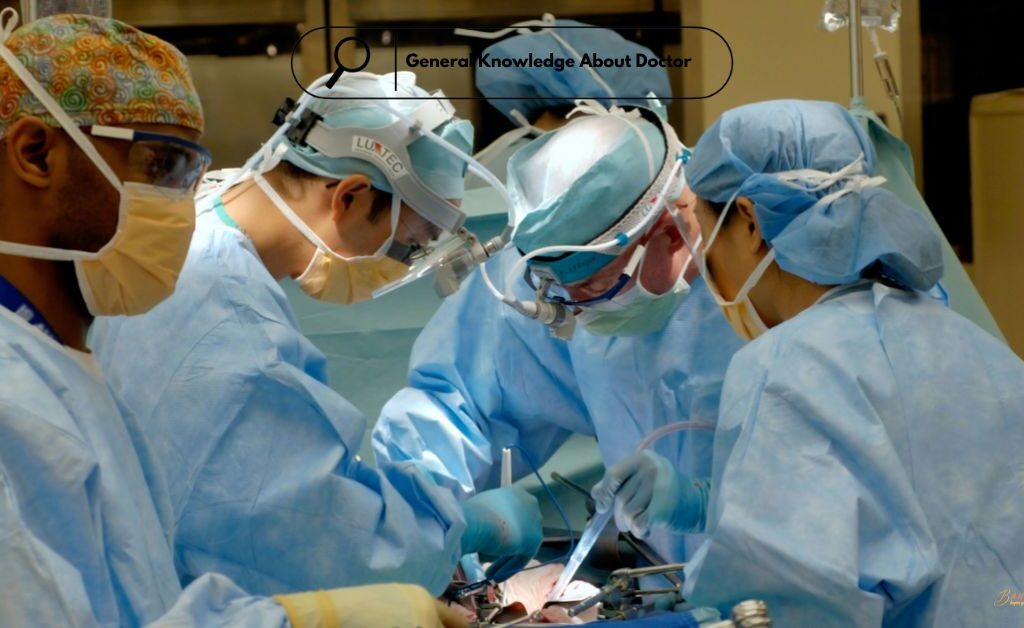
14. How much water do you actually need to drink?
The “eight glasses a day” rule has been around forever and is not really backed by solid science. It was a rough simplification that got repeated until people assumed it was fact.
Your actual water needs depend on your body size, how active you are, the climate where you live and how much water you get from food. That is more than most people realise, since fruits and vegetables are mostly water.
The practical test? Check your urine. Pale yellow means you are well hydrated. Dark yellow means drink more. Clear means you are probably overdoing it. Your body is a better guide than any fixed number.
15. What is the difference between a virus and bacteria?
Organisms that are alive are known as bacteria. They have their own metabolism, can live and reproduce independently and are single-celled. Antibiotics are effective against bacterial illnesses because they prevent the germs from carrying out essential metabolic activities.
There is a basic difference between viruses. They live differently. A virus is just a small piece of genetic material wrapped in a protein coat. It can not do anything on its own; it needs to take over a host cell to do its work. Antibiotics have no effect on viruses. This is the reason why doctors usually do not give antibiotics to people who have the flu or a cold.
Antibiotics do nothing to a virus, but they do add to antibiotic resistance, which is a major problem worldwide. The WHO has flagged antibiotic resistance as one of the biggest threats to global health today.
16. Why do we need sleep?
Sleep is not wasted time. It might be the most productive thing your body does.
The brain consolidates memories, processes emotions and restores your stress response while you are unable to function, as well as clears out waste products that build throughout the day.
People who regularly sleep fewer than 7 hours a night have measurably higher rates of heart disease, type 2 diabetes, obesity, anxiety and depression. And sleeping extra on weekends does not undo the damage from a short week. The effects are cumulative. You cannot bank sleep ahead of time either.
17. What is mental health and why does everyone keep talking about it?
A person’s emotional, psychological and social wellness make up their mental health. It pertains to your tension management, interpersonal interactions, decision-making and daily function. It is not about being happy all the time. A person with good mental health still has bad days, grief, anxiety and frustration. The difference is having enough tools and support to work through those things and keep going.
Roughly one in five adults worldwide experiences a mental health condition in any given year. That means in most classrooms or workplaces, several people around you are dealing with something significant. Because it is more prevalent than most people realize and less evident than a physical injury, it has been misunderstood for so long.
18. What is cholesterol and is it actually bad?
Cholesterol gets a bad reputation but your body actually needs it. It helps build cell membranes, produces hormones and supports digestion. The issue is not cholesterol itself. It is the balance between two types.
The “bad” cholesterol is known as LDL or low-density lipoprotein. It raises the danger of cardiovascular disease and stroke when it accumulates on the inside of arteries. A “good” type of lipoprotein is HDL (high-density lipoprotein). It is responsible for transporting cholesterol to the liver for processing and removal. Reduced HDL levels are associated with exercise. A high saturated fat diet tends to elevate LDL. Their ratio matters more than the overall number.
6 Money General Knowledge Questions Schools Never Teach You
Some of the most popular questions people ask every day on the internet are to financial matters. They are also the ones most people admit they wish someone had explained years earlier. For more financial topics, explore our finance articles on Baharlivings.
Financial Disclaimer: The financial information in this section is for general educational purposes only and does not constitute personalised financial or investment advice. Please consult a qualified financial adviser before making any financial decisions.

19. What is inflation and why does it keep going up?
Inflation is when the same amount of money buys less than it used to. A coffee that cost a certain amount five years ago costs noticeably more today. That is inflation in action.
It occurs when the supply of goods and services in an economy exceeds the demand for money. Prices rise when more money is used to purchase the same amount of items. It might be sparked by supply chain difficulties, increased consumer demand, rising manufacturing prices or government policy choices.
Most central banks aim to keep annual inflation around 2%. Low enough not to hurt people, but high enough to encourage spending rather than hoarding cash. Individuals with fixed incomes and low pay are hit the hardest by much higher inflation, as their buying power decreases faster than their earnings increase.
20. What is a credit score and how does it affect your life?
A credit score is a number, typically between 300 and 850 in most systems, that tells lenders how reliably you repay borrowed money, based on your track record of doing exactly that.
It is calculated from several factors: whether you pay bills on time (the biggest factor), how much of your available credit you are using, how long you have had credit accounts and how recently you have applied for new credit. Investopedia has a detailed breakdown of how credit scores are calculated if you want to go deeper.
Why it matters: a high score gets you better interest rates on loans, mortgages and credit cards. A low score or no score at all, either results in rejection or a significantly higher interest rate. Over the life of a large loan, that difference can add up to thousands of extra dollars or the equivalent in your currency.
21. What is a retirement savings account and why should you care now?
Most countries have some version of a tax-advantaged retirement savings account. The names change. IRA in the United States, ISA in the United Kingdom, Superannuation in Australia, PPF in India. But the core idea is the same everywhere. The government gives you a tax benefit for putting money away for later.
The key decision in most systems is whether you want your tax break now or later. Some accounts let you contribute before-tax money, reducing what you owe this year and you pay tax when you withdraw in retirement. Others take after-tax money now but let you withdraw everything, including all the growth, completely tax-free later.
As a general rule, if you are young and expect your income to grow significantly, locking in today’s lower tax rate usually makes more sense. Check what retirement account options exist in your country. The details vary, but the principle of starting as early as possible is universal.
22. How does compound interest work?
This is one of those basic money questions that seems boring until you see the numbers. That is when it changes the way you think about saving.
Compound interest means you earn interest on your interest, not just on your original amount. If you invest a sum at 7% per year, after the first year you have earned 7% on your original amount. In the second year, you earn 7% on the slightly larger total. It is a small difference early on but it snowballs significantly over time.
The same amount left completely untouched at 7% annual interest for 40 years grows to roughly 15 times its original value, without adding another penny. The variable that matters most is not how much you put in. It is how early you start.
23. What is the difference between a debit card and a credit card?
Simple but important. A difference that trips up a lot of people.
A debit card pulls money directly from your bank account when you spend. You are spending money you already have. If the money is not there, the transaction usually gets declined.
A credit card lets you borrow money from the card issuer up to a set limit. You spend first and pay it back later, typically at the end of each billing cycle. If you pay the full balance every month, you pay no interest and often earn rewards. If you carry a balance, you pay interest and credit card interest rates are typically very high, often 20 to 30% per year.
Used responsibly, a credit card builds your credit score and offers fraud protection. Used carelessly, it can lead to a debt spiral that takes years to clear.
24. What is the difference between saving and investing?
One of the most important money general knowledge questions for anyone starting to build their finances.
Saving is putting money away in a safe location you can get to, such as a bank account or a savings account. The money does not grow much but it is safe and available when you need it. Saving is for short-term goals and your emergency fund.
Stocks, bonds, real estate and mutual funds are all examples of investments that can increase in value over time but also carry some degree of risk. The value can go down before it goes up. Investing is for money you do not need for at least 5 years, where you can ride out short-term drops to capture long-term growth.
The mistake most people make is keeping money they should be investing sitting in a savings account earning almost nothing while inflation quietly erodes its value.
3 Technology and AI General Knowledge Questions Everyone is Asking

25. What actually is artificial intelligence?
Artificial intelligence (AI) is software that has been trained to do tasks that would typically need human thought. Recognizing voice, interpreting language, detecting objects in a photograph, making predictions and producing text or visuals.
The key difference between AI and regular software is this: normal software follows rules that a programmer explicitly wrote. AI learns its own patterns from examples. You show it millions of photos and it figures out what makes a cat a cat. You feed it billions of sentences and it learns how language flows. Nobody wrote those rules. The system found them by itself.
26. Is AI going to take my job?
The non-clickbait answer: probably not take it entirely, but almost certainly change what it looks like.
AI is already handling certain repetitive tasks across many industries. Basic data entry, answering routine customer service questions, formatting documents and generating first drafts of standard content. It is very likely that machines will take over jobs that only involve those tasks.
Complex judgment, real-life human connections, physical competence, innovative problem-solving and ethical decision-making are highly difficult tasks for automation to achieve. Most analysts predict AI will change the majority of jobs rather than eliminate them. It will shift what humans spend their time on, much like spreadsheets changed accounting or word processors changed writing.
The one point most experts genuinely agree on: people who learn to work alongside AI tools effectively will have a significant advantage over those who refuse to engage with them at all.
27. What is the difference between AI and machine learning?
AI is the broad term for any system that mimics human intelligence. Machine learning is one specific method of building AI.
Traditional AI relied on programmers writing explicit rules: “if this, then that.” Machine learning works differently. You feed the system large amounts of data and let it find the patterns itself, without being told what to look for. Most modern AI tools, including the ones that generate text, recognise faces or recommend videos, use machine learning at their core.
Machine learning subset deep learning employs multilayer networks inspired by the brain. Modern image recognition and language models function as effectively as they do due to this factor.
4 Geography General Knowledge Questions Answered Simply
Geography is one of the most popular general knowledge questions categories in quizzes and trivia worldwide. Yet most people have surprising gaps in the basics.
28. What are the seven continents?
Africa, Antarctica, Asia, Australia (sometimes called Oceania), Europe, North America and South America.
Asia is the largest by both land area and population, by a significant margin. Australia is the smallest continent. Antarctica is the only one with no permanent residents, just rotating groups of scientists at research stations with no permanent civilian population.
Worth knowing: different countries actually teach different versions of this. Some use a six-continent model merging Europe and Asia into Eurasia. Some combine North and South America into one. If you grew up learning a different number, you were not taught incorrectly. There is genuinely more than one accepted way to divide it up.
29. What is the most spoken language in the world?
Depends on how you count it.
Mandarin Chinese has the most native speakers, roughly 920 million people who grew up speaking it as their first language. But English has the most total speakers when you include people who speak it as a second or third language, around 1.4 billion people across the world. English is the default language of international business, science, aviation, diplomacy and most of the internet.
Spanish, Hindi, Arabic and French round out the top languages by total speakers and are each used as first or second languages across dozens of countries.
30. What is climate change and is it really happening?
Yes, it is happening. This is not a matter of scientific debate. It is one of the most thoroughly documented conclusions in the history of modern science.
Long-term changes in the world’s temperatures and weather trends are called climate change. The Earth’s climate has always different naturally over geological time. But what we are seeing now is happening many times faster than natural variation and it correlates directly with the rise in greenhouse gas emissions since industrialisation.
NASA’s climate science portal provides continuously updated evidence including temperature records, sea level data and ice measurements. The climate is changing and people are mainly to blame. This is something that all important science organizations agree on.
What is genuinely debated is policy. What to do about it, how fast, who bears the cost and what trade-offs are acceptable. That is a real and complex conversation. The underlying science itself is not the disputed part.
31. Why do some countries drive on the left and others on the right?
About 65% of the world drives on the right and about 35% drives on the left. The split mostly comes down to history and colonialism.
Driving on the left was the original standard across much of the world. In medieval Europe, mounted knights kept to the left so their sword hand, typically the right, faced oncoming riders. Britain kept this convention and spread it to much of its former empire. That is why you drive on the left in countries like Australia, India, South Africa, Japan and parts of the Caribbean.
France switched to the right during the revolution, partly to symbolise breaking with aristocratic tradition and Napoleon spread right-hand driving across much of continental Europe during his campaigns. Countries colonised by France or influenced by continental Europe generally drive on the right.
Frequently Asked Questions About General Knowledge
What are the most asked general knowledge questions globally?
Water intake, sleep and immune system function top search rankings globally. History common knowledge questions and personal finance basics are close behind across every major market.
Why do people ask AI tools general knowledge questions answered instead of just searching the web?
AI gives one direct answer in plain language instead of ten links to evaluate. For questions where you just want a clear explanation rather than twelve different opinions, it is often faster and less frustrating. It also handles follow-up questions naturally, so if one answer raises another question, you can just ask.
How do I actually improve my general knowledge?
Consistency beats cramming every time. Ten to fifteen minutes a day of reading something you find genuinely interesting, whether a newsletter, a podcast episode or a well-written article, compounds significantly over months and years. The goal is not to memories isolated facts. It is to build a connected framework so when you encounter something new, you already have a place to put it. Browse Baharlivings for more articles covering lifestyle, home, health and finance.
What subjects come up most in trivia and general knowledge games?
World history, geography, science basics, pop culture, sports and literature dominate trivia formats globally. A thorough understanding of twentieth-century world history, fundamental human biology and major world geography covers the majority of general knowledge questions answered found in most quiz formats.
Is it embarrassing to not know the answers to general knowledge questions?
No. Genuinely. The people who ask questions are the ones who end up knowing things. Every person you have ever admired for being knowledgeable got there by spending years asking exactly the common knowledge questions you are asking right now. The embarrassing thing is not the question. It is deciding you already know enough to stop asking.
How helpful was this? Share it with someone who always has the finest questions and read our articles on personal finance basics, world history and terrible health fallacies.
– – – – – – – – – – – – – – – – – – – – – –
**FOOTER DISCLAIMER:** The content published on Baharlivings is for general informational and educational purposes only. Nothing on this site constitutes professional medical, financial, legal or investment advice. Always consult a qualified professional before making decisions related to your health, finances or legal matters.
Baharlivings makes no representations as to the accuracy or completeness of any information on this site. Use of this site is at your own risk.